

Stained glass repair vs replacement: how to decide
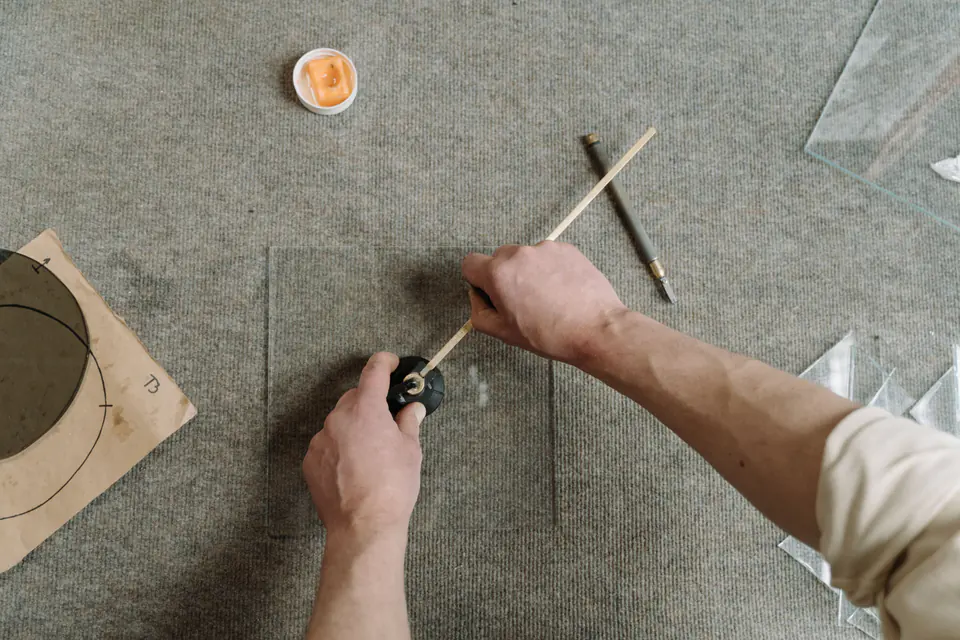
Most damaged stained glass is worth repairing. A few broken pieces can usually be replaced without taking the window apart, and even a sagging, leaky window can often be releaded with its original glass. Replacement makes sense mainly when the window has no particular value to you, the original glass is mostly gone, or you want a different design. The US National Park Service's guidance for historic windows is blunt about it: keep original glass whenever possible, because an imperfect original piece is nearly always better than a replacement [1].
What repairs cost
Published figures are thin, and they come from US contractors and artists, in US dollars:
| Job | Published figure |
|---|---|
| Stained glass repair (general) | $70–$800, average about $300 (HomeAdvisor) [2] |
| Repair, depending on damage | $500 or more (Thumbtack artist) [3] |
| Removing and reinstalling a window | $150–$200 (Thumbtack artist) [3] |
| Broken glass in an antique leaded cabinet door | about $400 (Thumbtack example) [3] |
| Restoring a crescent stairwell window | $3,000 (Thumbtack example) [3] |
| New custom stained glass, for comparison | $250–$600 per sq ft (HomeAdvisor) [2] |
A small repair is usually far cheaper than a new panel of the same size. A full releading can approach the cost of new work, because the artist takes the whole window apart and rebuilds it. You keep the original glass, though, and that's often the point.
The three kinds of repair
1. Replacing a few broken pieces
If only a few pieces are cracked, a glass artist can often replace them in place. The NPS brief calls this a "drop-in" or "stop-in" repair: the lead around the piece is opened, the new glass goes in, and the lead is closed and soldered [1]. Matching the colour and texture of old glass is the hard part. Ask the artist how close a match they can get and whether they'd source salvaged glass.
2. Repairing and flattening
Windows bulge as the lead ages and the panel's own weight pushes it out of plane. The NPS brief says a window sagging or bulging more than 1½ in (38 mm) out of plane should be removed and flattened [1]. It also says major repairs shouldn't be done in place, including when more than 5% of the glass is broken or solder joints are failing [1]. Expect the panel to go to the artist's bench.
3. Full releading
Lead came doesn't last forever. The NPS brief says came typically lasts 75 to 200 years, depending on the window's quality, design and environment, and that conservators often use a 100-year rule of thumb for 19th-century came [1]. Releading means taking every piece out of the old lead, cleaning it, and rebuilding the window in new came. It's slow, careful work. The brief notes that large projects can take several months and that each step carries some risk to the glass [1].
Signs your window needs work
- Rattling, drafts or leaks. The waterproofing cement inside the lead may have failed [1].
- A bulge you can see, or one that moves when gently pressed [1].
- Cracked or missing pieces.
- Broken solder joints or lead pulling away from the frame.
- Condensation between the stained glass and an outer protective layer. The NPS says the space between them should be vented and condensation must never be allowed to collect on the window [1].
Repair or replace? A quick guide
| Situation | Usually the better choice |
|---|---|
| One to a few cracked pieces, window otherwise flat | Repair in place |
| Bulging, rattling or leaking, glass mostly intact | Remove, repair or reglaze on the bench |
| Lead failing across the whole window, glass worth keeping | Full releading |
| Historic or family window | Repair or releading, keep the original glass |
| Cheap modern panel, heavy damage, no attachment | A new panel may cost less |
| You want a different design or size | A new commission |
What to ask a repair artist
- Can this be done in place, or does the panel need to come out?
- Will you keep the original glass, and how will you match replacements?
- Do you recommend full releading, partial releading or a smaller repair, and why?
- Who removes and refits the window, and how will you protect the opening meanwhile?
- Will you record the window first (rubbings or photos) if it's being taken apart? The NPS recommends rubbings before a full releading [1].
- Do you recommend protective glazing, and how will it be vented?
Which makers do this work
Repair needs the same skills as new stained glass: cutting, grinding, leading or foiling, soldering, and sometimes kiln-firing painted glass to match old detail. Makers who list a glass kiln can fire painted repairs. On The Spool List, post the repair once, free. Add photos of the whole window and close-ups of the damage, the size, and whether you need removal and fitting. Verified glass makers bid with a price and a timeline. You pay when you accept, the payment is protected, and the maker is paid when you confirm the work was delivered. See how it works, our price guide, and the glass work market page on The Spool List.
Post your stained glass repair free.
FAQ
Can I repair a crack with glue or tape?
That might hold a piece in place temporarily, but it isn't a repair. A glass artist replaces the piece or, for valuable glass, may stabilise the original. Ask before trying anything permanent.
How long does lead came last?
The NPS gives 75 to 200 years depending on quality, design and environment [1]. Many old windows are due for attention.
Will a repair look new?
A good repair blends in, but a replacement piece in old glass is rarely an exact match. That's why conservators keep cracked originals where they can [1].
Should I add an outer protective glass layer?
It depends on the building. The NPS says protective glazing is no substitute for maintenance and must be vented [1]. Ask the artist.